September 4, 2026
Why modern aircraft require simulators before entry into service?
Simulators are critical to bringing new aircraft into service.
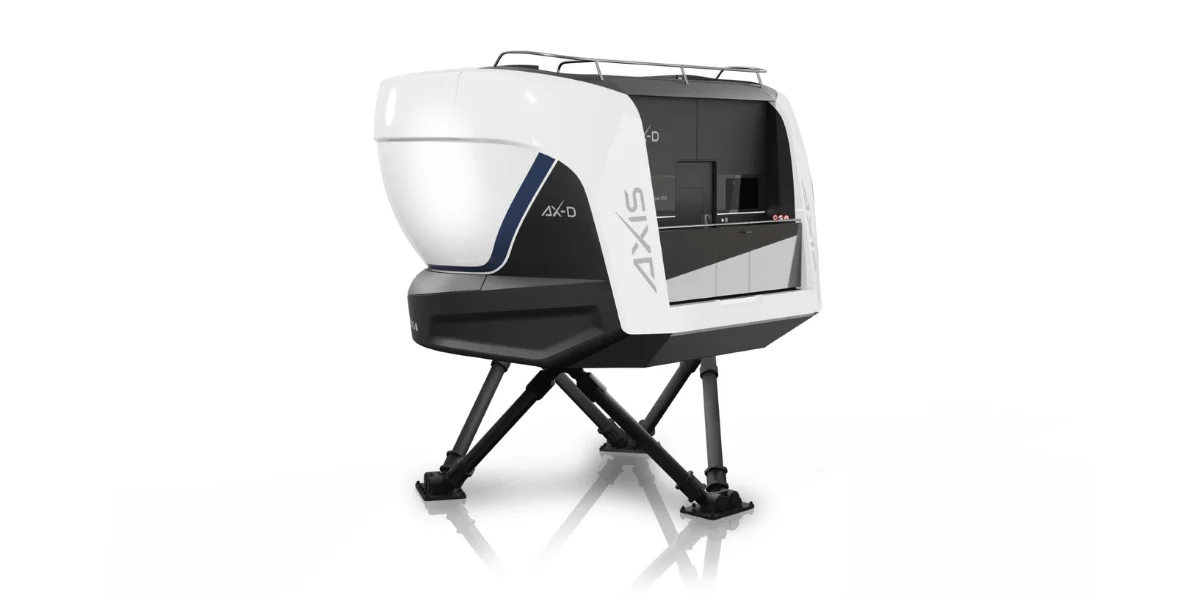
Simulators are critical to bringing new aircraft into service. Before an aircraft type can enter commercial operation, regulators need confidence that pilots can be trained to operate it safely in both normal and abnormal conditions. This makes high-fidelity simulation, accurately reflecting the aircraft’s systems and behaviour, a critical part of the certification and entry into service (EIS) process.
Why simulation is essential for pilot training?
Aircraft are complex, safety-critical machines, and many of the situations that pilots need to train for cannot safely be recreated in flight. Engine failures, rejected takeoffs, fire warnings, and system failures all need to be understood and practiced. A simulator gives crews a controlled environment in which to experience these scenarios and learn the appropriate response.
Engineering advancements also mean pilots are faced with managing integrated software such as flight controls, avionics, propulsion systems, cockpit displays, and automation. Understanding how those systems interact, particularly when one or more of them is degraded, is an important part of becoming competent on a new aircraft type.
Why simulator fidelity depends on flight test data?
For training to be effective, a simulator needs to accurately reproduce the behaviour of an aircraft. It should respond as the aircraft would, across the conditions and configurations required for training and qualification – and this accuracy depends on flight test data.
These insights provide the evidence needed to develop and validate the models behind the simulator. Collecting it means measuring how the real aircraft performs and responds across defined test conditions, with the quality, consistency and traceability needed for the resulting insights to be used with confidence.
Where AEROSET fits into the process?
Simulator data creates a link between two parts of a new aircraft programme that are closely connected: development and certification of the aircraft, and the training programme needed to prepare crews for EIS.
AEROSET sits at this handover point. On one side are the design organisation, flight test campaign and certification authority. On the other are the simulator manufacturer, training organisation and the operator that needs qualified crews when the aircraft begins operations.
As an independent flight test organisation, our role is to support the collection of the aircraft data needed to connect those two sides. This covers planning the campaign, defining instrumentation requirements, conducting the flight testing, verifying and documenting the resulting data, and supporting the validation activity that follows.
What data does a simulator need?
The validation requirements for a Full Flight Simulator (FFS) are defined by the applicable Flight Simulation Training Device (FSTD) qualification standard, such as CS-FSTD(A) in Europe and the equivalent FAA requirements in the United States. These standards define the validation tests the simulator must pass and the tolerances within which its response must match the aircraft.
This sits alongside the wider regulatory framework for bringing a new aircraft and its training programme into service. Operational Suitability Data (OSD) defines the flight crew training requirements, including the type rating syllabus, while CS-SIMD sets out how the aircraft data used to support simulator validation is defined and managed.
What needs to be captured in flight?
The flight test programme covers a broad range of aircraft behaviour. Performance data is required across take-off, climb, cruise, descent, approach and landing, as well as ground handling and braking. Data relating to handling qualities are needed to characterise areas such as static and dynamic stability, control response and trim.
Engine behaviour needs to be captured, including acceleration, deceleration and relight, alongside systems responses, ground effect, low-speed handling and stall characteristics.
Simulator manufacturers also require development data to build and tune the underlying models, together with the information needed to reproduce motion, visual and sound cues. The result is a substantial data requirement and one that needs to be considered early in the aircraft manufacturing programme.
Collecting data from an evolving aircraft
One of the main challenges with a new aircraft is that the configuration used to collect data may not remain static. During development, aerodynamic databases can be revised, flight-control software can move through different standards, and engine control laws can be retuned. Changes of this kind need to be assessed against data already collected, as amends to the aircraft configuration can affect whether insights remain valid.
A new programme may also have only a small number of dedicated flight test aircraft available to complete a large certification campaign. Simulator data collection must be planned alongside test points carrying direct certification credit, all of which are competing for aircraft time, engineering resources and suitable test conditions.
From this perspective, data collection should not be treated as an activity to address once the certification campaign is nearing completion. Its requirements need to be understood while the wider flight test programme is being developed.
Why data quality matters?
For simulator development, the conditions under which a manoeuvre is flown and the way the aircraft response is measured are critical. If a test point is flown slightly outside the required condition, it can reduce the value of the resulting data. The same applies if a parameter is sampled too slowly to capture a fast dynamic response, or if data acquisition systems are not sufficiently synchronised.
Problems at this stage flow directly into simulator development. If the aircraft data does not provide a clear reference, engineers may have to spend additional time resolving discrepancies during model integration and tuning.
Where insights are missing altogether, it may be possible to use engineering simulation or analytical justification to close the gap. However, that approach needs to be justified and documented.
Completeness ultimately affects what the simulator can be used to train. A device might reproduce normal aircraft behaviour accurately but still lack sufficient validated data for a particular failure case, environmental condition or part of the operating envelope. Depending on the gap, this can determine the level at which the simulator is qualified or result in specific training tasks being excluded.
Flight test data can become a programme bottleneck
Timing presents another challenge. The simulator manufacturer needs validated aircraft data well before the simulator is presented to the authority for qualification. Once insights have been collected, there is still a considerable amount of work to complete: model development, integration, iterative tuning, Qualification Test Guide (QTG) generation and authority evaluation.
The simulator data campaign sits early in a sequence of activities leading towards simulator readiness. Problems discovered after the flight test campaign can be particularly costly. A missing parameter, an incorrectly configured measurement or a manoeuvre flown outside its required condition may only become apparent when the data is reviewed in detail.
If the aircraft has already had its flight test instrumentation removed and returned to its approved configuration, resolving that gap may mean reinstrumenting the aircraft and returning to flight.
The better approach is to identify problems while the aircraft is still available to do something about them. For AEROSET, this means verifying data sortie by sortie rather than waiting until the end of the campaign. If a test point needs to be repeated, that decision can then be made while the aircraft, instrumentation and flight test team are still in place.
Planning simulator data from the beginning
For aircraft manufacturers, simulator validation data needs to be considered from the outset, alongside planning for the wider certification programme.
Rather than adding simulator points opportunistically to an existing flight test campaign, both sets of demands can be incorporated into an integrated test matrix. Simulator data points can then be identified, budgeted and scheduled as defined test objectives.
The Validation Data Roadmap (VDR) should support that process from the beginning of the programme. Treated as a live planning document, it provides a means of identifying what evidence will be needed, how it will be obtained and when it needs to be available, rather than becoming a compliance document assembled towards the end of the programme.
The same principle applies to instrumentation. The architecture needs to account for the parameters, sampling rates, synchronisation and data quality required for both aircraft certification and simulator development.
Data assurance should then continue throughout the campaign. Reviewing each sortie before the next is flown provides an opportunity to identify missing or questionable data while the aircraft remains in its instrumented configuration. Ideally, equipment should remain in place until the required dataset has been reviewed and confirmed as complete.
Keeping simulator development on track for EIS
The target for any new aircraft programme is not simply to have a certified aircraft. The wider operation needs to be ready to support it, including the crews who will fly it.
This creates a dependency between aircraft development, flight testing, simulator development and training. If the required aircraft data is considered too late, simulator readiness can become a constraint on crew training. If it is planned from the outset, the data collection campaign can run alongside the wider certification effort and provide simulator manufacturers with the evidence they need when they need it.
For AEROSET, this is where careful flight test planning and rigorous data collection have a role to play. The objective is to go beyond completing the required test points and deliver a complete, traceable, and usable aircraft dataset that can support the next stage of development. Because when a new aircraft is ready to enter service, the simulator – and the crews trained in it – need to be ready too.
More articles:
June 1, 2026
CS-SIMD: Critical for Flight Simulator Consistency
August 9, 2026
What is flight test instrumentation and why is it important?

June 3, 2026