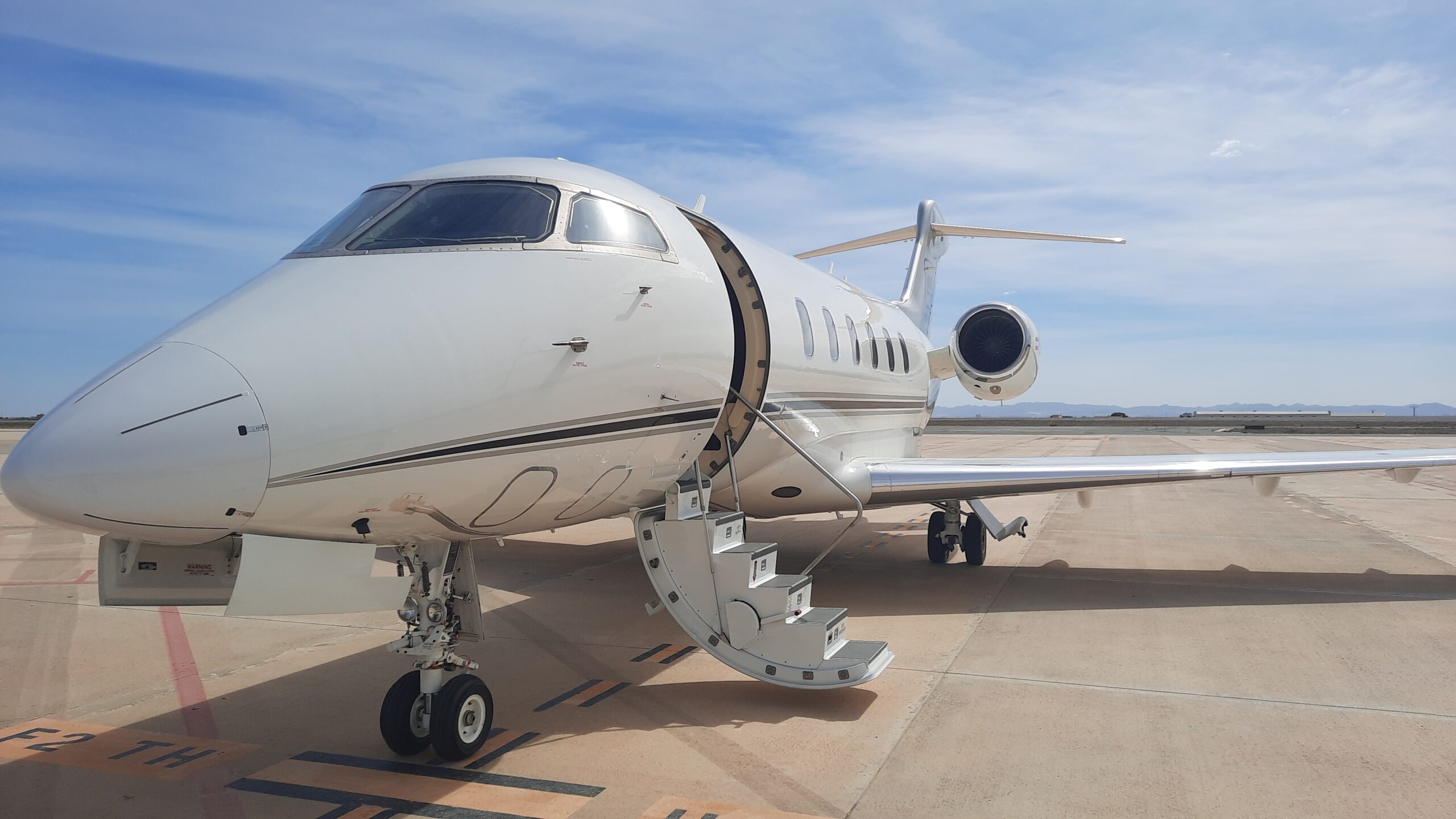
Challenger 650 & 605
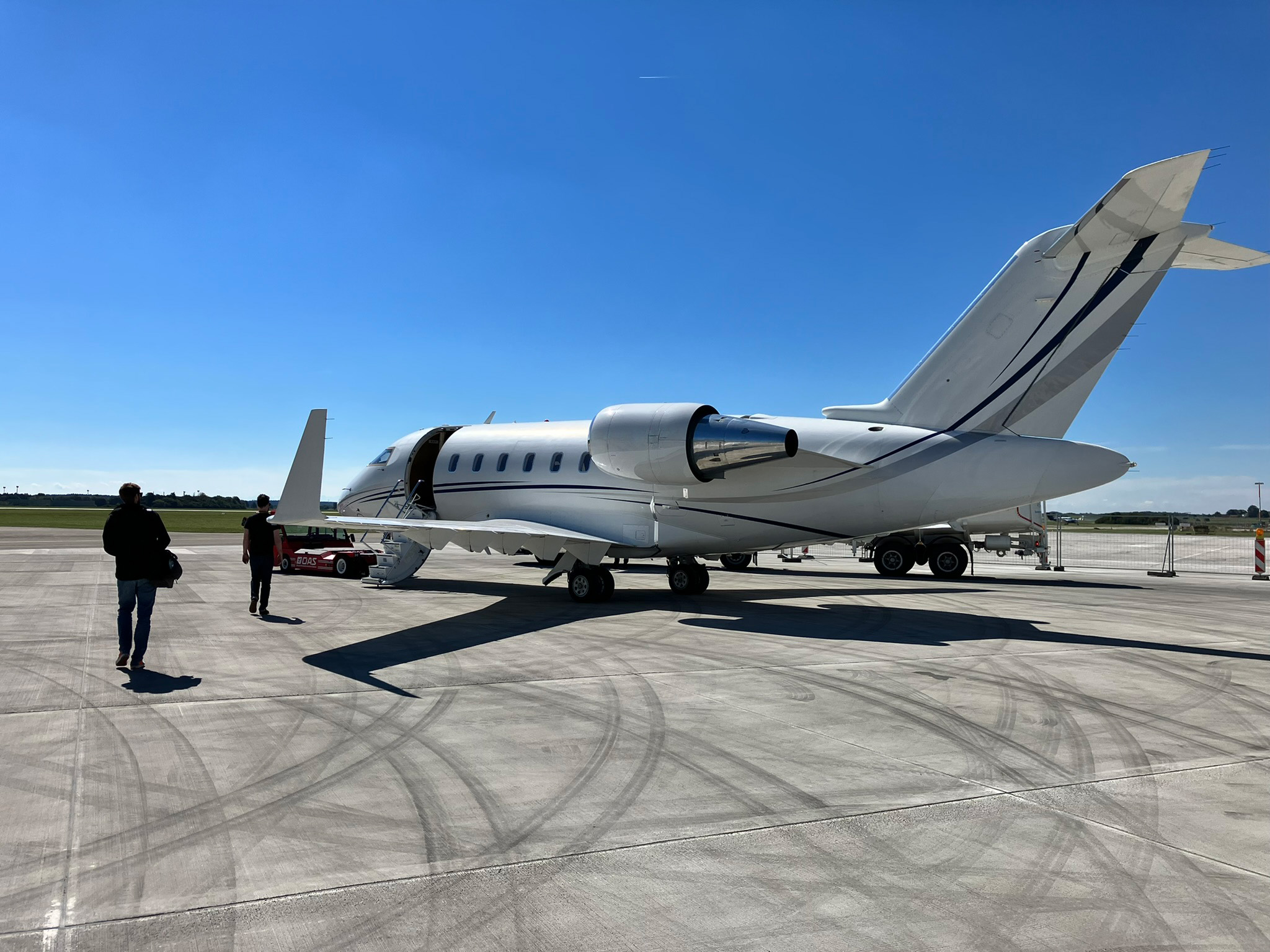
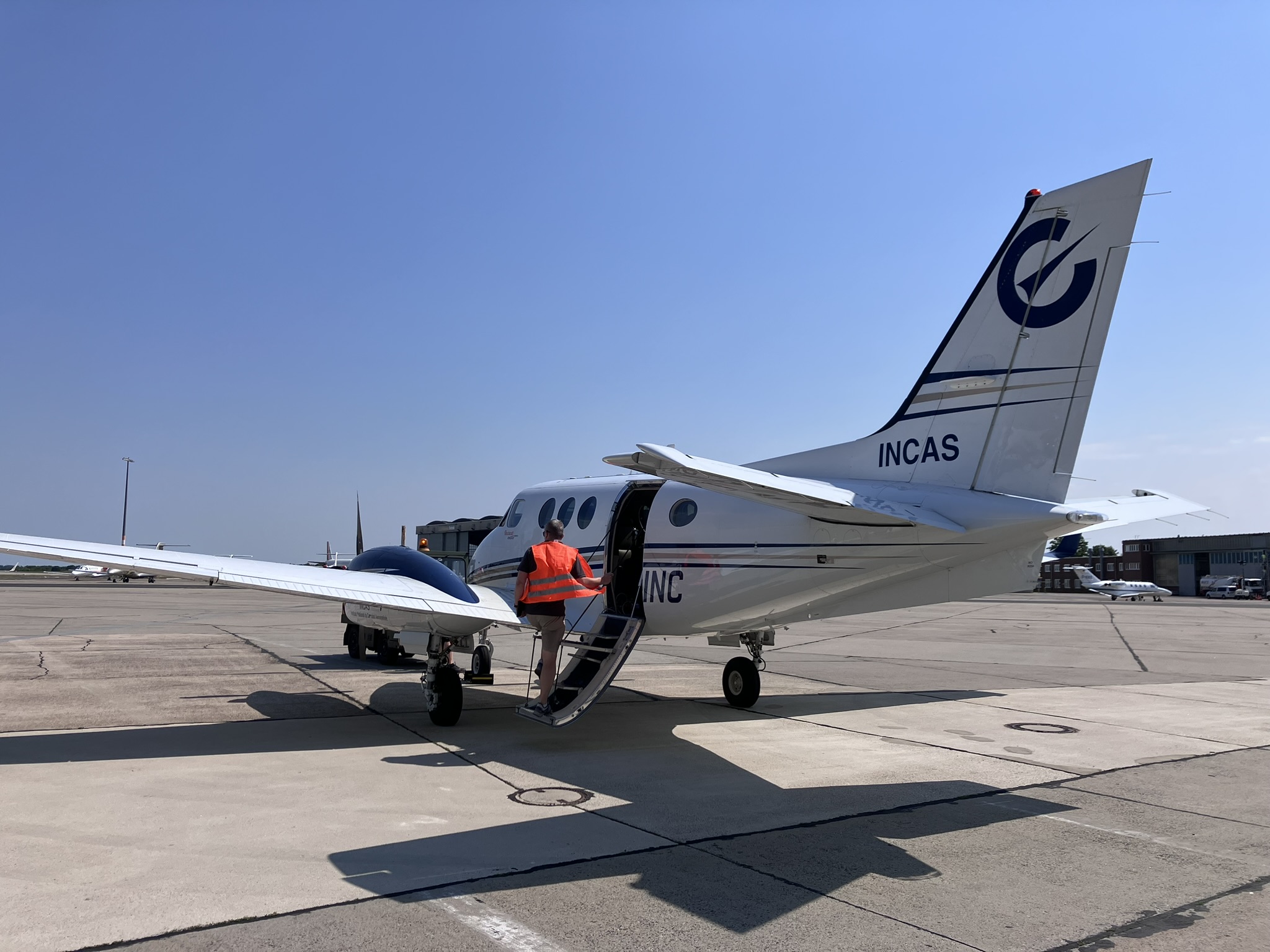
Aeroset Flight Test ran the complete airborne data-collection program behind a full Level D simulator development effort on two Bombardier Challenger business jets, from aircraft procurement to qualification. A Challenger 650 campaign in spring 2022 was followed that September by a second campaign on a Challenger 605, picking up the flight numbering where the first left off, so that flights 1 to 15 were on the CL650, then 16 to 38 on the CL605. The two campaigns shared a single flight test plan and a base at Oberpfaffenhofen near Munich, and together logged roughly 88 flight-test hours covering everything a Level D simulator needs — performance, handling qualities, control forces and displacements, takeoff and braking performance, cabin sound, vibration and flight dynamics across the full operating envelope.
The Challenge
The program faced two major constraints.
The operational environment added complexity. The test matrix included crosswind-sensitive items — wind boxes near VMO, Dutch rolls, dynamic engine failures — that demand stable wind and weather rarely available on cue. Airspace around Munich (EDMO) resulted to be inflexible, requiring most sequences to be flown elsewhere: Spanish airports and the Mediterranean test area LED26 for the dynamics-heavy work in the first campaign, with Slovakia, Slovenia and Austria in the second. AOA and AOS pressure ports on the flight test nose cone were a persistent constraint, since cloud penetration meant moisture ingress and a post-flight nitrogen purge before the next sortie.
The third constraint was the scope and technical depth of the program. The CL650 campaign could not fit the full regulatory test matrix into the first aircraft’s availability window — particularly the takeoff, landing and braking performance work that needs specific runways, weights and conditions. Rather than compromise the dataset, the program was extended onto a second aircraft. The CL605 campaign was built specifically to expand the scope with rejected takeoffs, maximum-braking landings, near-MTOW configurations and the takeoff and landing conditions the first campaign had to leave on the table.
Our Approach
Both campaigns ran on a shared test matrix and a single flight test plan, supported by detailed pre-flight and post-flight briefings, with test cards and run lists prepared in advance and refined daily as data came back. Working with the selected instrumentation setup and its specialist supplier inputs, Aeroset coordinated the integration, calibration logic, airworthiness route, daily operation and data-collection process across both aircraft. Run notes from the cockpit and instrumentation positions were captured for every condition and delivered with the data, giving the simulator team a full audit trail per test point.
The second campaign was also an opportunity to fix what the first had exposed. GPS position parameters logged on the CL650 were later found to be inertially-derived rather than true GPS; on the CL605 the team corrected this, adding proper GNSS and hybrid position parameters and installing a dedicated flight test GPS for roughly 10 cm horizontal accuracy. Where the CL650 had found several aircraft control-surface positions reported over ARINC with insufficient precision, the CL605 instead tapped the aircraft’s analogue RVDT signals directly for aileron, rudder and elevator position.
Important factors were detailed and timely communication with all parties, detailed briefings on to-be-flown items, multiple feedback loops from pilots to fine-tune manoeuvres, and a highly agile team to cope with daily operation and unforeseen challenges.
A flexible base structure made the geography work. Oberpfaffenhofen (EDMO) was the primary base for both campaigns, with instrumentation installed and maintained there; the air work moved to wherever the conditions and airspace suited — Reus, Granada and Ciudad Real in Spain, Bratislava, Maribor and Linz in Central Europe, and the LED26 Mediterranean test area for the longer dynamic sequences.
Key Activities
- Aircraft sourcing and operational coordination for both the CL650 and CL605 test aircraft
- Flight test instrumentation design and installation coordination on both aircraft, including a three-axis navigation-grade accelerometer at the aircraft CG, variable-capacitance accelerometers at the pilot seat, AOA and AOS pressure ports on a flight test nose cone, position potentiometers for the primary controls, and flight deck cameras, with studio-grade flight deck microphones
- ARINC 429 integration management monitoring 60+ aircraft system parameters across air data, inertial reference, flight control, engine and avionics systems.
- Brake pressure instrumentation on the CL605, plumbed to all four brake systems for rejected takeoff and maximum braking landing conditions.
- Analog control-surface position tie-ins on the CL605 (aileron, rudder, elevator) where ARINC surface-position precision proved insufficient on the first campaign.
- Ground-based control force calibration using a Moog Control Force Measurement system in the hangar at EDMO across both campaigns.
- Airworthiness coordination with EASA Part 145 maintenance organization under program service bulletins.
- Airspace, airport and ATC coordination across Germany, Spain, Slovakia, Slovenia and Austria, plus the LED26 Mediterranean test area.
- Weight and balance / ballast planning for aft-CG and near-MTOW conditions, including verification weighs in flight-test configuration.
Results
The program flew 38 numbered test flights across both aircraft — CL650 flights 1 to 15 in spring, CL605 flights 16 to 38 in September — for roughly 88 flight-test hours, and delivered a complete Level D data package to the simulator developer with no major program-stopping event. The second campaign closed the gaps the first could not address: Rejected takeoffs, maximum braking landings (including a dedicated sortie to Linz for an MLW maximum-braking condition), near-MTOW configurations, and the takeoff and landing performance work needed for regulatory compliance.
Both campaigns handled real-world disruptions without losing data. On the CL650, unexpected manoeuvre responses on early flights — a rudder doublet that produced 45 degrees of bank —fed into improved test procedures rather than stopping the work. On the CL605, a brake-pedal calibration error on early flights was corrected and the affected data reprocessed retroactively. Where production GPS and surface-position data fell short, the team re-instrumented rather than accept the limitation. Proactivity and contunius feedback loops of lessons learned is what carried a two-aircraft, multi-country program to a complete dataset.