November 23, 2026
CS-FSTD Issue 1: Understanding EASA’s new flight simulator qualification framework
The European Union Aviation Safety Agency (EASA) has introduced a new regulatory framework for Flight Simulation Training Devices (FSTDs).
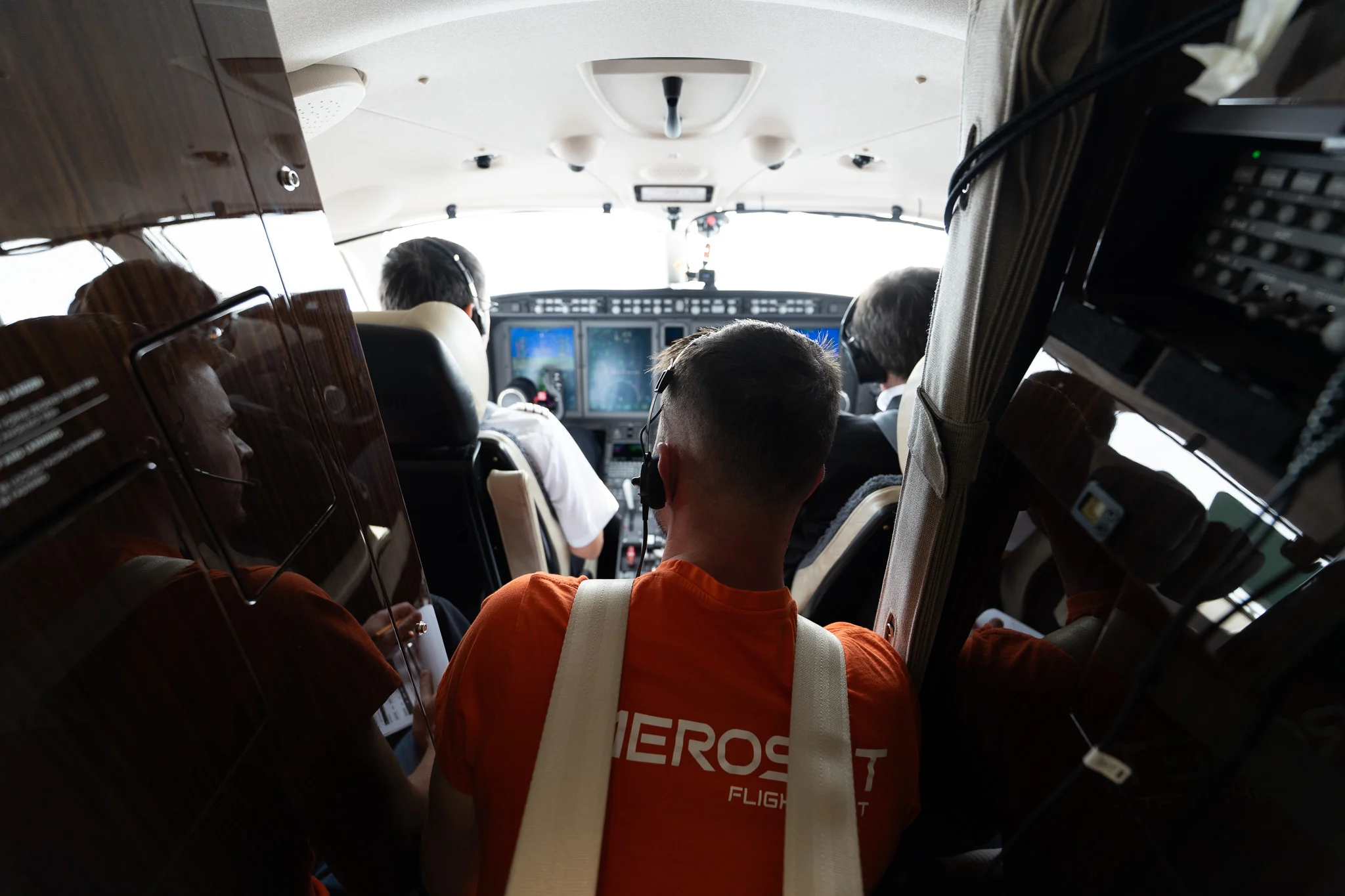
The European Union Aviation Safety Agency (EASA) has introduced a new regulatory framework for Flight Simulation Training Devices (FSTDs), established through Regulation (EU) 2026/781 and supported by CS-FSTD Issue 1, a 630-page set of technical specifications.
The framework covers aeroplane and helicopter simulators and introduces a new approach to how devices are qualified for pilot training. Under the current system, simulators are assessed against established categories and levels, such as Full Flight Simulator (FFS) Level D, with a defined set of technical requirements.
From 30 April 2028, new approvals will instead be based on 14 individual features, each evaluated according to its level of fidelity, or how accurately it represents the aircraft. This approach allows training providers to use devices designed to meet their specific training objectives.
Manufacturers must now demonstrate how each feature meets the applicable technical standards. This requires reliable aircraft data to prove that the simulator behaves as intended, making flight testing and data validation a crucial part of the qualification process.
Why is EASA changing FSTD qualification?
Flight simulators are an established tool for pilot training, allowing users to practice procedures, aircraft handling and emergency scenarios in a controlled environment, without the cost or operational risks of flying a real aircraft.
Different training activities require different simulator capabilities. While the existing European FSTD qualification system provides a recognised standard, it can restrict manufacturers developing devices that do not fit neatly within established categories.
For example, a device used to train pilots on engine start-up procedures, cockpit checks and aircraft system failures may need highly accurate cockpit controls and system responses, but not a motion platform. By contrast, a simulator used to practice take-offs, landings and engine failures during flight may require more advanced flight handling, motion and visual systems to reproduce how the aircraft behaves in those situations.
Driving innovation in flight simulation
EASA’s new framework allows these capabilities to be evaluated separately, with qualification based on 14 individual simulator features rather than a single predefined device level. Crucially, this approach helps remove regulatory barriers to innovation, making it easier to introduce technologies that have traditionally been difficult to accommodate within existing simulator classifications.
For example, virtual reality (VR) headsets that allow pilots to complete certain training activities, such as aircraft familiarisation and basic procedures remotely, rather than travelling to a specialised training centre. This capability helps ease pressure on training facilities, free up simulator capacity and support the wider pilot training pipeline.
Other technologies such as AI, touchscreen flight deck interfaces and alternative cockpit configuration, can also help address current training barriers.
Preparing for qualification
From 30 April 2028, all newly qualified devices must follow the new FSTD Capability Signature (FCS) framework. However, existing qualification certificates will not automatically become invalid, with transitional provisions allowing previously qualified devices to continue operating under the applicable requirements.
EASA has also introduced an optional task-to-tool approach for certain aeroplane and helicopter type-rating and operator recurrent training programmes. This allows training organisations to match specific activities with simulators that have the necessary capabilities, rather than relying solely on a device’s overall qualification level. For example, practicing cockpit procedures may not require the same simulator features as training pilots to land an aircraft in challenging weather conditions.
The aim is to give operators greater flexibility in simulator design while ensuring that devices meet the technical standards required for their intended training use.
What is EASA CS-FSTD Issue 1?
CS-FSTD Issue 1 sets out the technical requirements for qualifying flight simulators under EASA’s new framework. At its centre is the FSC, which describes performance characteristics across 14 individual features, each assigned a level of fidelity.
Rather than qualifying against a single standard, such as FFS Level D, the new system applies technical requirements according to the fidelity claimed for each feature. The simulator still receives one qualification certificate, but this now includes its FCS, showing which functions have been demonstrated.
What are the 14 FSTD features?
The features fall into three groups:
- Aircraft simulation – these cover the aircraft’s physical configuration and behaviour, including flight deck layout and structure; flight control hardware; flight control system operation; aircraft systems; ground handling; in-ground-effect performance and handling; and out-of-ground-effect performance and handling.
- Cueing simulation – these reproduce the information and sensations pilots experience, including sound, vibration, motion and visual cues.
- Environmental simulation – these represent the conditions in which the aircraft operates, including navigation; atmosphere and weather; and operating sites and terrain.
Each feature can receive one of four fidelity designations:
- S – Specific: represents a particular aircraft type and variant.
- R – Representative: represents an aircraft type.
- G – Generic: represents a broader aircraft group.
- N – None: the feature is not claimed.
Each function is assigned a fidelity level based on the capabilities the simulator can demonstrate. A device may end up with different fidelity ratings across its flight controls, aircraft systems, visual displays and other features, depending on its intended use. This allows manufacturers to focus investment on the characteristics needed for specific training activities, rather than developing every feature to the highest level of fidelity.
A simulator’s qualification does not automatically authorise its use for every type of pilot training. While the FCS identifies the capabilities a device has demonstrated, its use for specific training activities remains subject to separate regulatory requirements.
How does the new FSTD qualification process work?
CS-FSTD Issue 1 makes the relationship between intended training use, simulator design and supporting evidence more explicit. The qualification process can be broken down into nine key stages.
The process starts by identifying the simulator’s intended training use and defining the required fidelity level for each of its 14 features. These ratings form the FSC, which determines the technical requirements the device must meet.
Operators are required to then demonstrate compliance through supporting engineering documentation, objective testing and subjective evaluations. The competent aviation authority reviews this and assesses the simulator before granting qualification. Once approved, operators must maintain the device’s qualified capabilities through ongoing testing and recurrent evaluations.
What happens to existing simulators?
CS-FSTD Issue 1 applies to new simulator qualifications from 30 April 2028, meaning existing devices will not automatically need to be requalified.
Operators can continue using simulators under their existing qualifications, subject to the applicable requirements. There is also a route for eligible devices to receive an assigned FCS, while operators planning significant upgrades may choose to pursue qualification under the new system.
For operators considering upgrades, the starting point is to review the simulator’s existing qualification, identify which capabilities they want to improve and establish whether the available technical data can support those changes.
The role of aircraft data in FSTD qualification
Under CS-FSTD Issue 1, manufacturers must provide evidence that each simulator feature meets the requirements for its claimed fidelity level. This involves documenting the aircraft data used to develop the simulator, demonstrating how its models behave and comparing their performance against suitable reference data.
There are several types of data and supporting documents involved in this process:
Design data
Design data provides the technical information used to build the simulator’s models. This can include aircraft geometry, aerodynamic characteristics, engine performance, flight-control behaviour and aircraft system logic.
For example, reproducing an aircraft’s hydraulic system requires information about how it operates, which systems depend on it and how it responds to failures. The ER identifies the design data used and explains the engineering decisions behind the simulation models.
Validation source data and validation data
Validation source data comes from aircraft flight tests, ground tests and other permitted engineering records. It provides the basis for establishing the reference data used in simulator qualification.
Insights are applied to compare the simulator’s performance against the aircraft’s actual or otherwise appropriately established behaviour during objective testing.
Flight test data is particularly important when a manufacturer claims Specific fidelity, meaning the simulator must accurately represent the characteristics of a particular aircraft type and variant.
The aircraft configuration and test conditions also matter. Data recorded from an aircraft with a different engine or avionics configuration, for example, may not be suitable for validating certain simulator features.
Validation Data Roadmap
The VDR records which reference data supports each applicable qualification test, including its source, aircraft configuration and any limitations.
Under CS FSTD.ENG.025, all FSTDs must now have both a VDR and an Engineering Report (ER), regardless of their claimed fidelity levels. While previous regulations already required validation-data documentation, the specific requirements varied depending on the FSTD’s qualification category. The new rules standardise these requirements across all FSTDs.
Engineering evidence and test results
The ER must demonstrate that the simulator’s models are valid across the relevant operating envelope, not only at the conditions covered by individual test points. For example, a flight model may reproduce an aircraft’s performance accurately at one speed and altitude but behave differently at higher altitudes or lower speeds.
The Engineering Report, VDR and QTG document the models, reference data and test results used to demonstrate compliance.
How AEROSET supports CS-FSTD Issue 1 compliance
AEROSET Technology supports simulator manufacturers and operators with the aircraft data needed for development and qualification. This includes planning and conducting flight test campaigns, sourcing and instrumenting aircraft, and acquiring and processing data for simulator validation.
For new devices and upgrades to existing simulators, AEROSET can help identify gaps in available data and collect the additional measurements needed to support specific fidelity requirements, reducing the risk of repeat testing later in the qualification process.
As the April 2028 deadline approaches, the availability of reliable aircraft data could determine how smoothly manufacturers move through the new qualification process.
Contact our team to discuss the requirements for your next simulator project: Contact us – Aeroset
More articles:
August 9, 2026
What is flight test instrumentation and why is it important?

June 3, 2026
The role of Operational Suitability Data (OSD) in aircraft certification

July 13, 2026