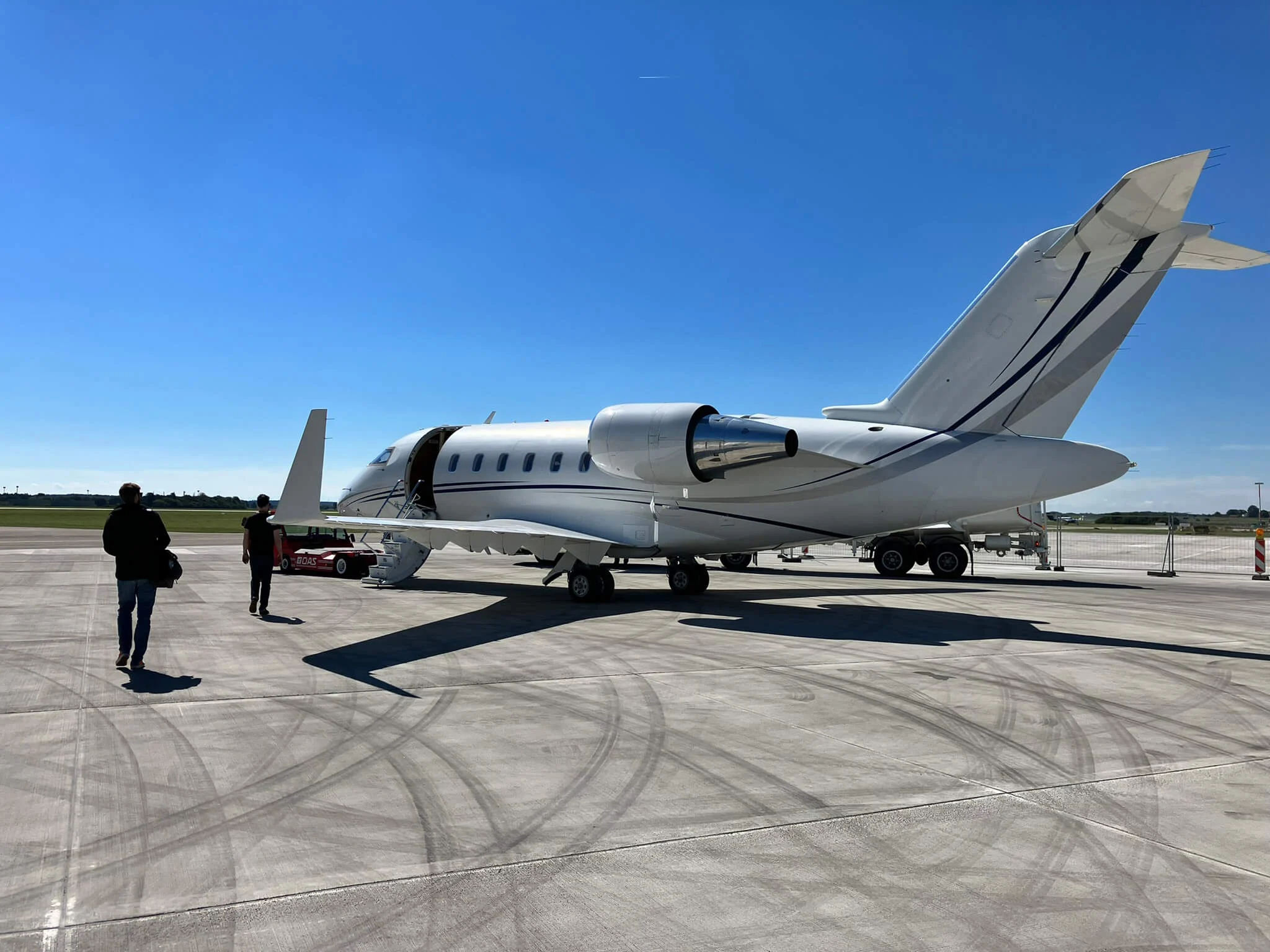
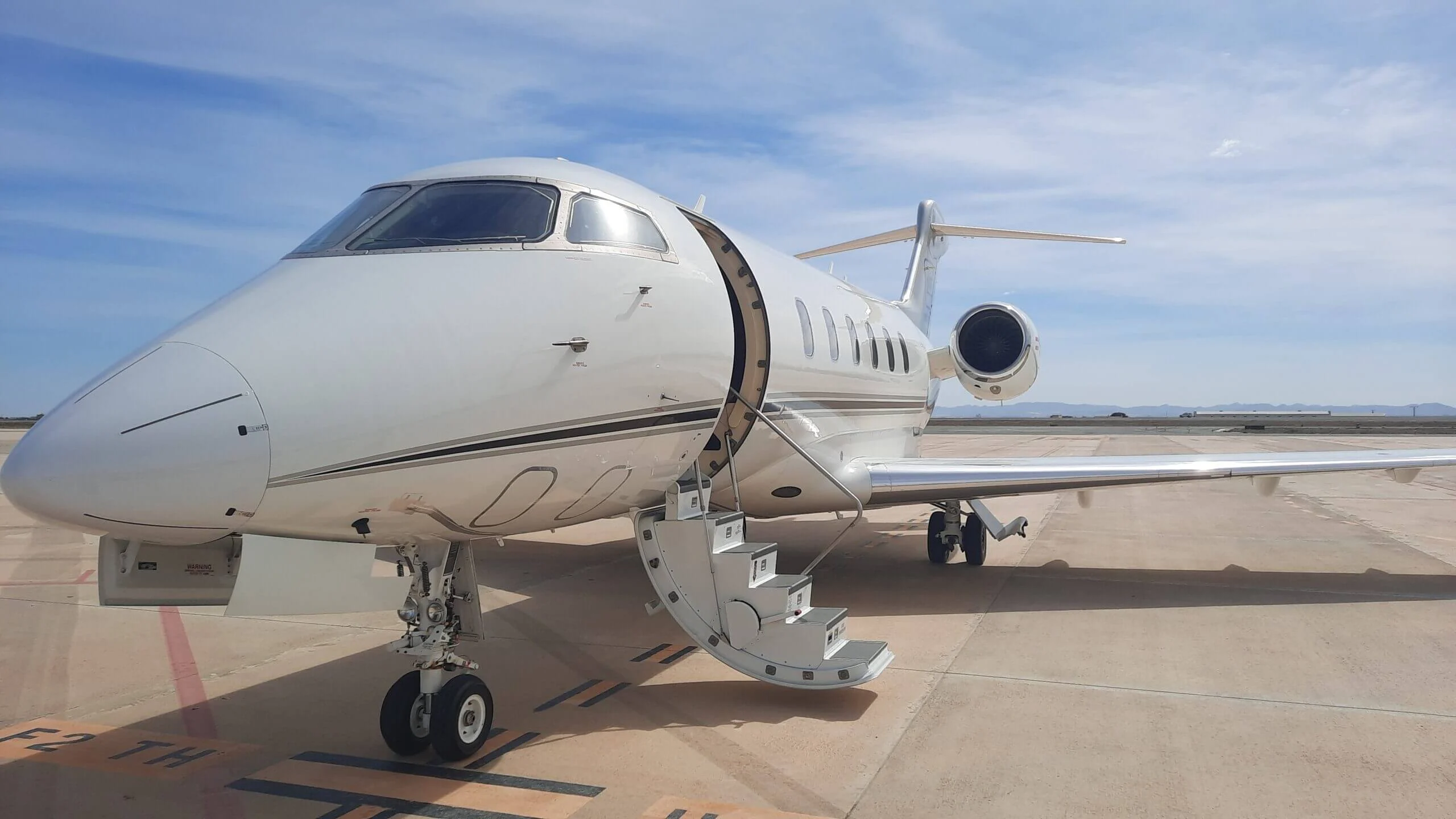
King Air C90
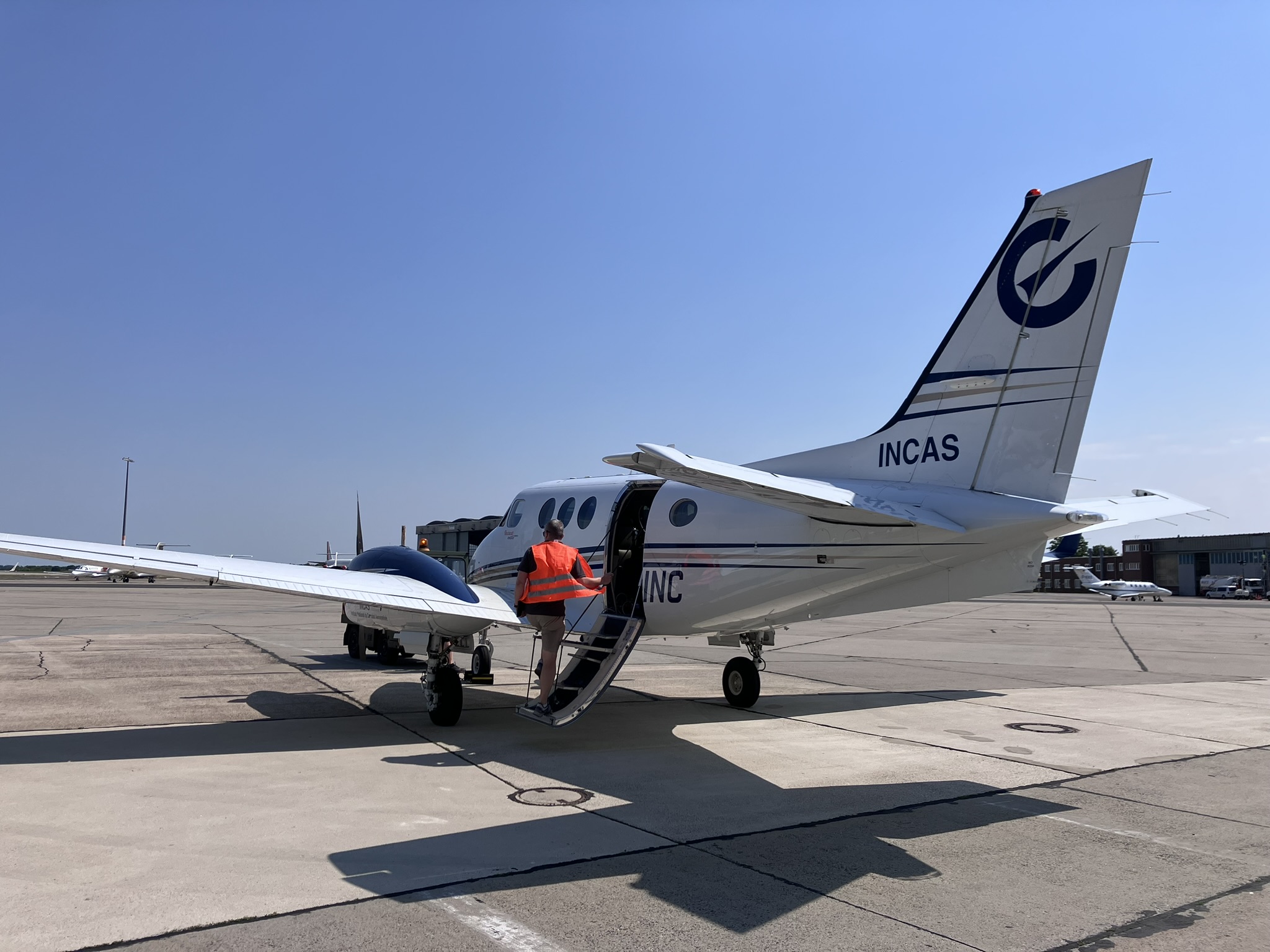
Aeroset Flight Test ran the King Air C90 simulator data campaign over the course of a year, from June 2023 to June 2024, completing 41 ground and flight sessions out of bases around Berlin and about 45 flight hours. The work supported development of a full flight simulator for the Beechcraft King Air C90 GTx and covered everything a simulator needs: performance, handling qualities, control forces and displacements, cabin sound, vibration, flight dynamics, and a deep set of emergency procedures. The aircraft, a Romanian-registered C90 GTx, flew under an EASA flight-condition approval and a Romanian CAA Permit to Fly, with all test equipment installed by an EASA Part 145 organization under a purpose-written service bulletin. This campaign presented various complications, which were addressed successfully.
The Challenge
Three things made this campaign distinct from a business-jet program.
First, the airframe. The King Air C90 is a compact turboprop, and the flight deck simply has less room than the Challenger cabins the team was used to. Consequences became immediately apparent; during the first brake-calibration session a force-gauge connector fouled on the instrumentation panel structure when the inboard pedal was pushed fully in, overstressing the connector and shearing its cotter pins. The brake-pedal calibration had to be repeated later in the campaign once the setup was reworked for the tighter space.
Second, the airworthiness path. Because the instrumentation counted as a major change, the aircraft needed an EASA flight-condition approval followed by a Permit to Fly. The C90 is Romanian-registered, so the Permit to Fly was issued by the Romanian Civil Aviation Authority. When a planned four-week landing-gear and propeller maintenance block pushed the campaign past the original permit’s validity, an extension had to be obtained before flying could resume. The maintenance itself required re-calibrating around a dozen position and angle sensors that had to be removed for the work.
Third, the operating rules. The Permit to Fly restricted the aircraft to visual meteorological conditions only — no flight in rain, ice, hail or snow — with the crew limited to pilot, co-pilot and a single system operator/flight test director. That narrowed the usable weather windows considerably and put a premium on getting each available day right. The Permit to Fly also imposed turbulence and maximum speed limitations, affecting the ability to collect high-speed sound and vibration data. This later required a separate flight after returning the aircraft to its normal configuration; for this flight a portable measurement system was used to capture the remaining high-speed data.
Our Approach
The team built the campaign around a Test Condition Matrix and a handheld flight test card deck, with one card per manoeuvre type, supported by detailed pre- and post-flight briefings throughout. Working with the selected instrumentation setup and its specialist supplier inputs, the team coordinated the integration, calibration logic, airworthiness route, daily operation and data-collection process. With the Permit to Fly still pending at the start, the team didn’t wait: they ran a series of in-hangar and ground sessions at Berlin to advance the calibration work — brake forces, control sweeps, trim rates — while the paperwork cleared, so they could move straight to productive air work once the permit was issued.
A flexible base structure kept things moving. Instrumentation was installed and later removed at FAI Technik in Berlin (EDDB). The bulk of the air work ran out of Schönhagen (EDAZ), routing north and north-east of Berlin, with two sorties flown in dedicated military airspace and additional work out of Cochstedt (EDBC) in order to meet runway-length requirements for ground-roll and performance tests and work around Berlin-area airspace constraints.
Control forces were captured with hardware suited to a mechanically controlled aircraft. An instrumented “pseudo yoke” carried integrated load cells to record pitch and roll forces, and strain-gauge bridges were bonded to the rudder-pedal push-pull rods beneath the floor. These were calibrated against reference force sensors and used for both ground and in-flight measurement.
Key Activities
- Aircraft sourcing and operational coordination of the Romanian-registered C90 GTx test aircraft.
- Flight test instrumentation design and installation coordination, including an IMU with GPS-aided attitude at the aircraft CG, variable-capacitance accelerometers under the pilot seat, AOA and AOS pressure ports on a flight test nose cone, main-gear brake-pressure transducers, around 30 string potentiometers across control positions, surface and trim angles, gear and flap positions, two flight deck cameras and precision condenser microphones with interphone audio.
- ARINC 429 integration capturing attitude and heading, air data, and engine parameters (N1, prop RPM, ITT, torque, oil pressure and temperature) plus radio height, with all labels decoded before first flight.
- Purpose-built control-force instrumentation — an instrumented yoke with integrated load cells and rudder-pedal strain-gauge bridges, calibrated against reference force sensors.
- EASA Part 145 installation and airworthiness coordination, including EASA flight-condition approval, Romanian CAA Permit to Fly, and a permit extension after the mid-campaign maintenance block.
- Structural and systems qualification of the installation, including a load test of the instrumentation tray and electrical bonding, EMI/EMC testing, and a cabin pressurization check after sealing the cable and tubing run through the cabin window.
- Daily flight test direction with pre- and post-flight briefings and real-time data monitoring.
- Mid-campaign sensor re-calibration after scheduled landing-gear and propeller maintenance.
- Airspace and airport coordination across Berlin-Brandenburg, Schönhagen and Cochstedt, plus dedicated military training airspace.
Results
Including the administrative challenges, the campaign completed 41 flight sessions across roughly a year, delivering a full simulator data package covering performance, handling qualities, control forces and displacements, flow noise and vibration, and a deep emergency-procedures set for a program of this kind — dynamic engine failures after takeoff, critical-engine scenarios through go-around and single-engine climb and approach, emergency gear extension and retraction, and emergency descents.
The program absorbed several real-world disruptions without losing the dataset. The early brake-calibration pin failure was reworked and the affected points re-flown; intermittent DAS power-supply faults that interrupted a couple of sessions were managed by restarting acquisition; an emergency-exit seal leak noticed at FL100 during a high-speed run to 226 KIAS was handled within the test discipline; the four-week maintenance pause was used as an opportunity to re-baseline the affected sensors rather than as lost time. Running ground and hangar calibrations while the Permit to Fly was still being issued meant the flying phase opened straight into productive test work.